

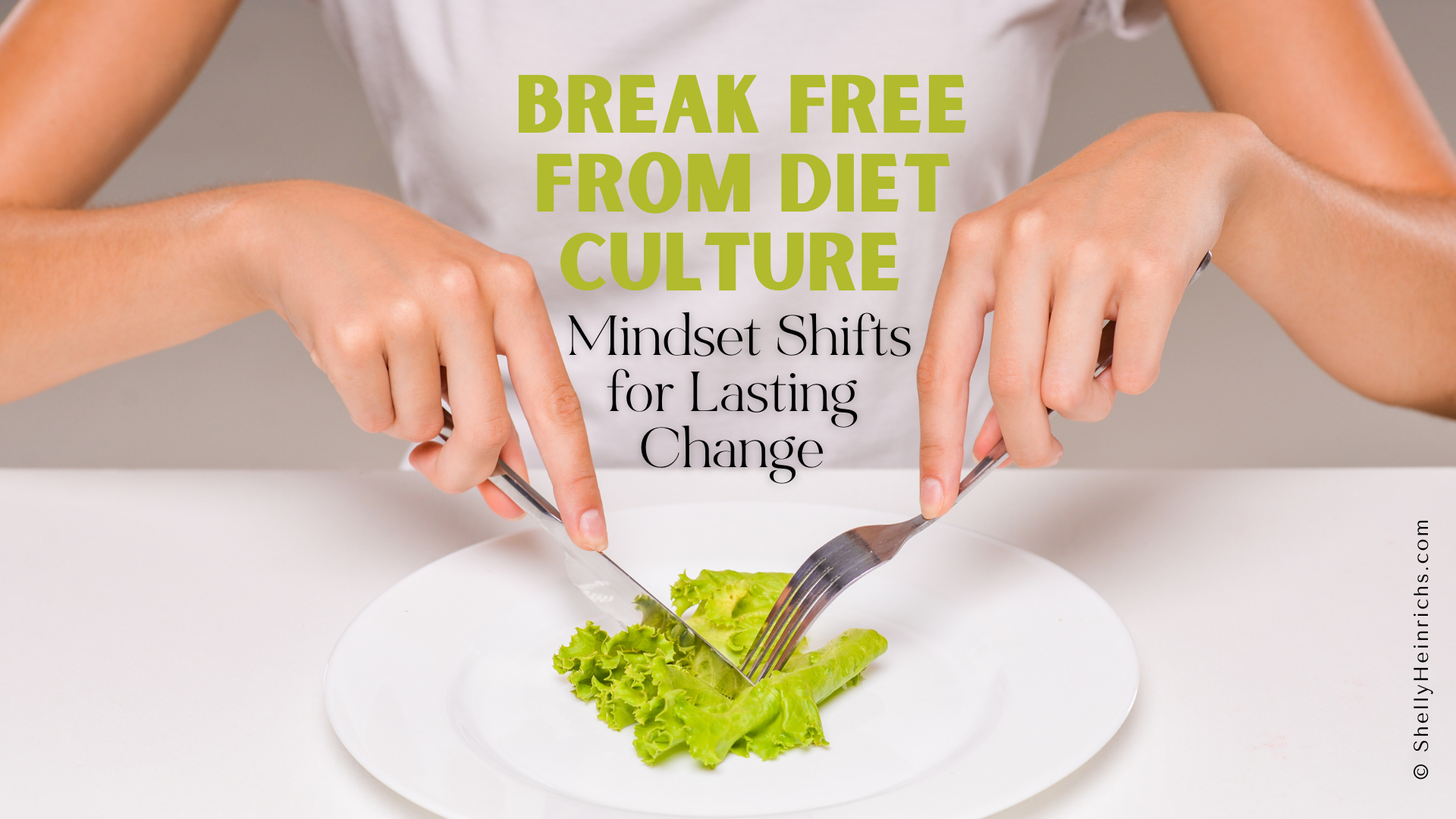
Have you ever felt like you’re stuck in a never-ending cycle of dieting, losing weight, and then gaining it all back? Trust me, I’ve been there. For years, I was caught in the grip of diet culture and its promises of quick fixes and miracle solutions. But what if I told you there’s a better way to break free? A way that doesn’t involve deprivation, guilt, or constantly battling with your body? In this blog post, we’ll explore how to break free from the restrictive mindset of diet culture and embrace a more balanced, sustainable approach to health and wellness. We’ll dive into overcoming the “all-or-nothing” mentality, building a positive body image while working towards health goals, and developing self-trust around food choices. These mindset shifts can lead to lasting change, improved health, and a more peaceful relationship with food and your body.
The Trap of All-or-Nothing Thinking
One of the biggest obstacles to lasting change is the “all-or-nothing” mentality. This black-and-white thinking pattern is a common cognitive distortion that can sabotage our efforts to break free and improve our health and well-being. I know this all too well from my own experience. For years, I was the queen of all-or-nothing thinking when it came to dieting. If I slipped up and ate something “off-plan,” I’d throw in the towel completely. “I’ve already messed up,” I’d think, “so I might as well eat all the things.” This would lead to a spiral of overeating, followed by intense guilt and promises to “start fresh” on Monday, or the first of the next month. This type of thinking set me up for failure because it didn’t allow for the natural ebbs and flows of life. It created unrealistic expectations and led to feelings of guilt, shame, and ultimately, giving up on my goals altogether.
Break Free from All-or-Nothing Thinking
To overcome this mindset, we need to embrace the concept of progress, not perfection. Here are some strategies that helped me shift my thinking and break free:
- Recognize the grey areas: I learned that life isn’t black and white. There’s a whole spectrum of choices between “perfect” and “failure.” I started acknowledging that small steps in the right direction were still valuable.
- Practice self-compassion: When I slipped up, I began treating myself with kindness. I spoke to myself as I would to a good friend who was struggling.
- Focus on consistency, not perfection: Instead of aiming for 100% adherence to a plan, I aimed for 80-90%. This allowed for flexibility and reduced the likelihood of giving up entirely.
- Reframe “failures” as learning opportunities: Every setback became a chance to gather information about what worked for me and what didn’t. I used this knowledge to adjust my approach moving forward.
- Celebrate small wins: I started acknowledging and appreciating the small steps I took towards my goals. These little victories added up over time.
By shifting away from all-or-nothing thinking, I created space for sustainable change and growth. Remember, the path to better health is rarely a straight line – it’s more like a winding road with ups and downs along the way.
Building a Positive Body Image While Working Towards Health Goals
In a world obsessed with unrealistic beauty standards, cultivating a positive body image can be challenging, especially when you’re also working on improving your health. It’s important to remember that health and self-love are not mutually exclusive. In fact, they often go hand in hand.
Separating Self-Worth from Appearance
One of the first steps in building a positive body image is to recognize that your worth is not determined by your weight, shape, or size. You are so much more than your physical appearance. Your kindness, intelligence, creativity, and countless other qualities make you who you are. For years, I tied my self-worth to the number on the scale and my size. If the number was down, I felt great about myself. If it was up, I felt like a failure. Learning to separate my worth from my appearance was an important step in my journey towards better health and self-acceptance.
Focusing on Function Over Form
Instead of fixating on how your body looks, try shifting your focus to what your body can do. Celebrate the strength that allows you to carry groceries, the endurance that lets you play with your kids or grandkids, and the resilience that helps you recover from illness. When I started appreciating my body for what it could do rather than how it looked, I found a new sense of gratitude and respect for myself. This shift in perspective made it easier to make choices that supported my health, rather than punishing my body for not looking a certain way.
Practicing Gratitude for Your Body
Take time each day to appreciate your body. This could be as simple as thanking your legs for carrying you through the day or your hands for allowing you to create or nurture. Gratitude can help shift your perspective from criticism to appreciation.
Surrounding Yourself with Positivity
Be mindful of the media you consume and the people you surround yourself with. Choose sources that promote body diversity and self-acceptance. Break free from accounts that make you feel bad about yourself and seek out those that inspire and uplift you.
Setting Non-Appearance-Based Goals
While working on your health, set goals that aren’t solely focused on weight or appearance. For example, aim to improve your energy levels, sleep quality, or ability to manage stress. These goals can be just as rewarding and often lead to improved health outcomes. Remember, building a positive body image is a journey, not a destination. Be patient with yourself and celebrate the progress you make along the way.
Developing Self-Trust Around Food Choices
One of the most liberating aspects of breaking free from diet culture is learning to trust yourself around food. Years of restrictive dieting can erode our ability to listen to our bodies and make intuitive food choices. With practice and patience, we can rebuild this trust. For the longest time, I felt like I needed a strict plan to follow. If I wasn’t suffering, I believed it couldn’t possibly work. I’d jump from one restrictive diet to another, always looking for the perfect plan that would finally “fix” me. But the truth is, no external plan can work long-term if we don’t learn to trust ourselves and our bodies.
Listening to Your Body’s Signals
Start by tuning into your body’s hunger and fullness cues. Before eating, ask yourself if you’re truly hungry or if you’re eating for other reasons (stress, boredom, etc.). During meals, pause occasionally to check in with your body. Are you still hungry? Are you comfortably satisfied? This was a challenging but transformative practice for me. After years of ignoring my body’s signals, it took time to reconnect with my natural hunger and fullness cues. But with practice, I began to understand what true hunger felt like and how to recognize when I was comfortably satisfied.
Break Free from Food Rules
Diet culture often imposes strict rules about what, when, and how much to eat. These rules can override our natural instincts and lead to a disconnected relationship with food. Start challenging these rules by giving yourself unconditional permission to eat all foods. I used to have a long list of “good” and “bad” foods. Letting go of these labels was scary at first, but it ultimately led to a more balanced and peaceful relationship with food.
Practicing Mindful Eating
Mindful eating involves paying full attention to the experience of eating. This means eating without distractions, savouring each bite, and noticing the flavours, textures, and sensations of your food. This practice can help you enjoy your food more fully and recognize when you’re satisfied.
Embracing Imperfection
Remember, there’s no such thing as perfect eating. Some days you might eat more than you need, other days less. Some meals might be more nutritious than others. This variability is normal and part of a healthy relationship with food. Learning to embrace imperfection was a huge shift for me. I used to beat myself up for every perceived dietary misstep. Now, I understand that perfection isn’t the goal – consistency and overall patterns are what matter most.
The Power of Low Carb and Ketogenic Approaches
While developing a positive relationship with food is crucial, it’s also important to find an eating pattern that supports your health goals and makes you feel your best. For many people, including myself, a low carb or ketogenic approach can be transformative. Low carb and ketogenic diets have been shown to offer numerous health benefits, particularly for those struggling with issues like obesity, type 2 diabetes, and metabolic syndrome. One study published in the journal Diabetes, Obesity and Metabolism found that a ketogenic diet led to significant improvements in glycemic control and weight loss in people with type 2 diabetes.In my personal experience, adopting a low carb, ketogenic approach helped reverse many of my health issues, including pre-diabetes, fatty liver disease, and high blood pressure. It also led to substantial weight loss and allowed me to come off several medications.
What surprised me most about this approach was how it didn’t feel like deprivation. For the first time in my life, I didn’t feel constantly hungry or overrun by intense cravings. This made it much easier to stick with long-term, without feeling like I was “on a diet.” Some key benefits of a low carb or ketogenic approach include:
- Improved blood sugar control: By reducing carbohydrate intake, these diets can help stabilize blood sugar levels and improve insulin sensitivity.
- Reduced hunger and cravings: Many people report feeling less hungry and experiencing fewer cravings on a low carb or ketogenic diet, which can make it easier to maintain long-term.
- Increased energy: Once adapted to using fat for fuel, many people experience more stable energy levels throughout the day.
- Improved mental clarity: Some studies suggest that ketones, produced during ketosis, may have neuroprotective benefits and can improve cognitive function.
- Better lipid profiles: Contrary to popular belief, low carb and ketogenic diets often lead to improvements in cholesterol levels, particularly increasing HDL (good) cholesterol and decreasing triglycerides.
It’s important to note that while these approaches can be highly beneficial for many people, they’re not one-size-fits-all solutions. What works best for you will depend on your individual health status, goals, and preferences. Always consult with a healthcare professional before making significant changes to your diet, especially if you have pre-existing health conditions.
Moving Forward: Embracing a Holistic Approach to Health
As I wrap up, it’s important to remember that true health encompasses more than just what we eat or how much we weigh. It’s about nourishing our bodies, minds, and spirits in a way that allows us to live our fullest, most vibrant lives. Here are some final thoughts to consider as you break free from diet culture and embark on your journey towards lasting change:
- Be patient with yourself: Change takes time. Be kind to yourself as you navigate this process. I had to learn this the hard way – beating myself up for perceived failures only led to more self-defeating behaviours.
- Focus on how you feel: Instead of fixating on numbers on a scale, pay attention to how different foods and habits make you feel. This shift in focus was the most important for me.
- Prioritize self-care: Make time for activities that nurture your mental and emotional well-being, not just your physical health. Self-care isn’t selfish – it’s necessary for long-term health and happiness.
- Stay curious: Keep learning about your body and what works best for you. Your needs may change over time, and that’s okay. I’m constantly amazed by what my body tells me when I take the time to listen.
- Seek support: Surround yourself with people who encourage and support your journey towards better health. Having a supportive community can make all the difference.
Remember, the goal isn’t to achieve perfection, but to create a sustainable, enjoyable approach to health that enhances your quality of life. By shifting your mindset away from restrictive dieting and towards self-trust and body respect, you’re setting the foundation for lasting, positive change. If you’re interested in learning more about how to implement these mindset shifts or explore whether a low carb or ketogenic approach might be right for you, I’m here to help. As a certified holistic nutrition coach and keto coach who has been through this journey myself, I offer personalized guidance to help you navigate your health journey. Feel free to reach out for a consultation – together, we can create a plan that aligns with your unique needs and goals.Here’s to your health, happiness, and a future free from the constraints of diet culture!
0 Comments