

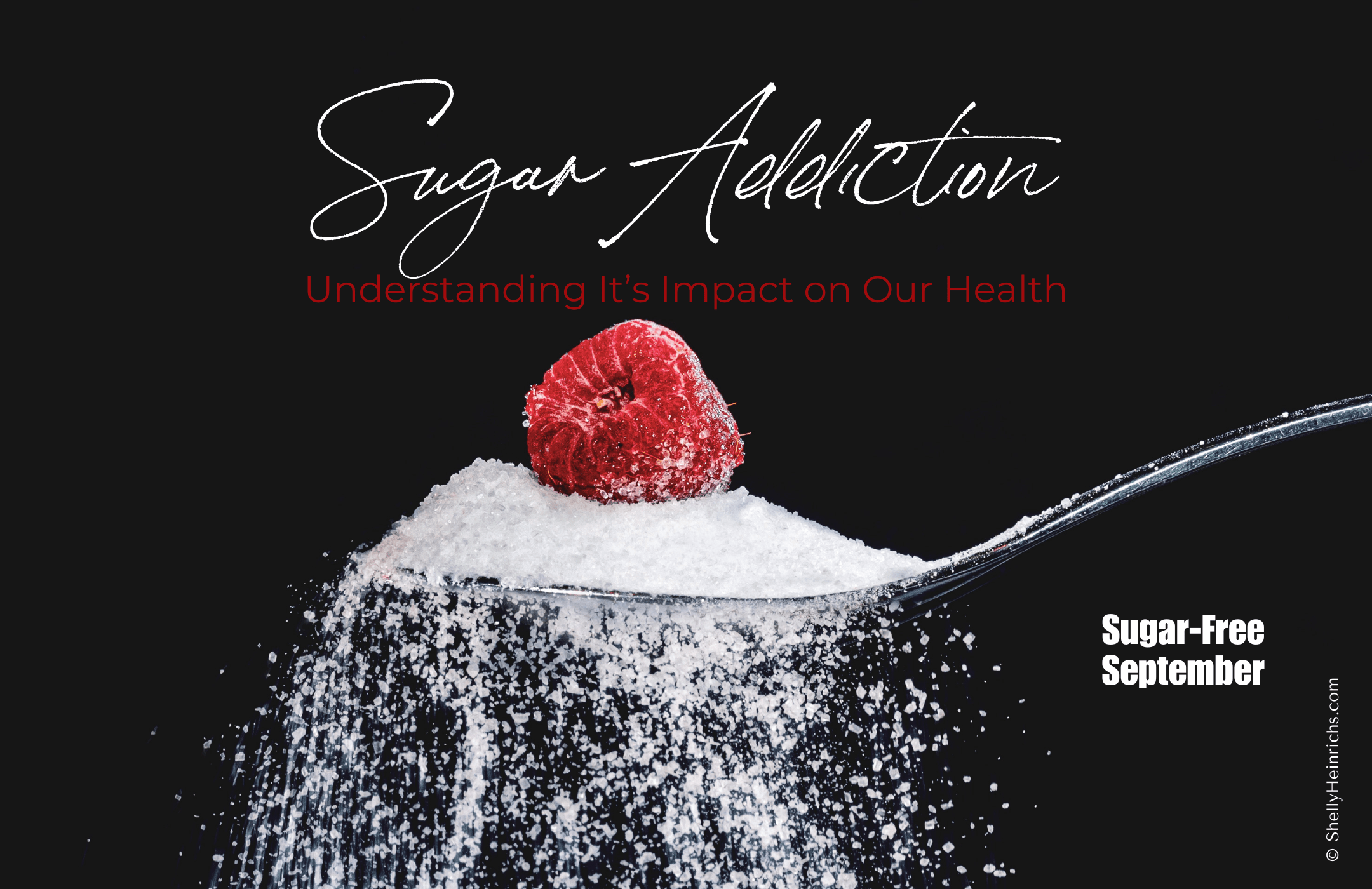
I’m kicking off Sugar-Free September with a month of bog posts on Sugar Addiction – what it is, how to navigate cravings, breaking free and social situations.
In our modern world we are surrounded by sweet and sugary treats. Everywhere we turn, sugar is an acceptable “drug”, and most don’t feel it’s an issue until they try to give it up. Many struggle with sugar daily and feel they just don’t have will power. It’s more than that so read on and learn what it is, how it works, why it’s so insidious. We need to understand the impact of sugar on both our physical health and emotional well-being.
When we eat something sweet and sugary it sets off a series of biochemical reactions in our body that influences our behaviour and triggers cravings. Our brain’s reward center gets a dopamine hit (feel-good) and that rush makes sugary foods enticing. Our brain quickly learns that eating sugar gives us pleasure and so we crave more of it. Over time more sugar is needed to get that same feel-good response and an addictive cycle is born.
The impact of sugar addiction goes far beyond the immediate cravings and satisfaction. Have you ever felt a sudden drop in energy after eating sugary treats? You may even feel “hangry” or cranky and NEED to eat something to feel better. That’s your infamous “sugar crash” and your body’s way of saying it’s out of energy. When we consume sugar, especially in excess, our blood sugar levels spike, followed by a rapid decline that leaves us feeling drained and fatigued.
Excessive sugar consumption can lead to weight gain, insulin resistance, inflammation, and an increased risk of chronic diseases like type 2 diabetes and heart disease. Sugar also affects our well-being by causing you to feel moody, irritable, and anxious, craving more sugar just to feel better.
Have you ever had a stressful day and ate a sweet treat for comfort? Emotional triggers play a huge role in food addiction especially sugar addiction. When we’re stressed, sad, or even bored, sugary foods become a form of comfort or entertainment. Sugar becomes that escape from reality, a distraction.
As we navigate life’s ups and downs, our brains develop an association between our emotional states and the pleasure we feel from sugar. The coping mechanism provides momentary relief and deepens our reliance on sugar. Every time we reach for sugary treats, the link between our feelings and our cravings becomes more ingrained.
Understanding that sugar addiction is real is the first step towards breaking free.
Recognizing the signs of sugar addiction and the emotional triggers that fuel it empowers us to make informed choices. One effective tool that has helped me is keeping a food journal. By documenting what you eat, when you eat it, and the emotions tied to your consumption, you gain insight into patterns and triggers that may have previously gone unnoticed or ignored.

Mindful eating, too, plays a role in breaking the sugar cycle. Tasting each bite, eating slowly, and listening to your body’s hunger and fullness cues can help you regain control over your eating habits. Incorporating stress-reduction techniques such as deep breathing, meditation, and mindful awareness can also offer a healthier alternative to turning to sugar for comfort.
0 Comments